Ethical Mineral Supply Chain: Mining, Production & Environmental Standards
Over the course of the following months, we will build a complete and detailed, fully transparent knowledge hub that will help you navigate the complicated world of ethical mining and production. Please return regularly to stay up to date and subscribe to our newsletter.
Knowledge Center
Responsible Mining, Ethical Production, Environmental Stewardship & International Mineral Trade
Ethical mineral supply cannot be defined by extraction alone.
Gemrock International approaches responsibility as a continuous system that extends from geological origin to finished product, including mining, material science, processing, fabrication, logistics, and international compliance.
Each sector within the mineral and jewelry industries operates under distinct technical, environmental, and regulatory realities. Decorative stone quarrying differs fundamentally from precious gemstone extraction. Gold mining differs from silver mining. Lapidary workshops operate under different risk structures than jewelry fabrication facilities. International export compliance introduces yet another regulatory layer.
The Knowledge Center provides structured insight into these interdependent systems and defines the standards required for integrated ethical mineral trade.
Mining Sectors
Different mineral industries operate under distinct environmental and regulatory realities. A unified ethical standard must recognize those differences.
Non-Precious Decorative Stone Mining
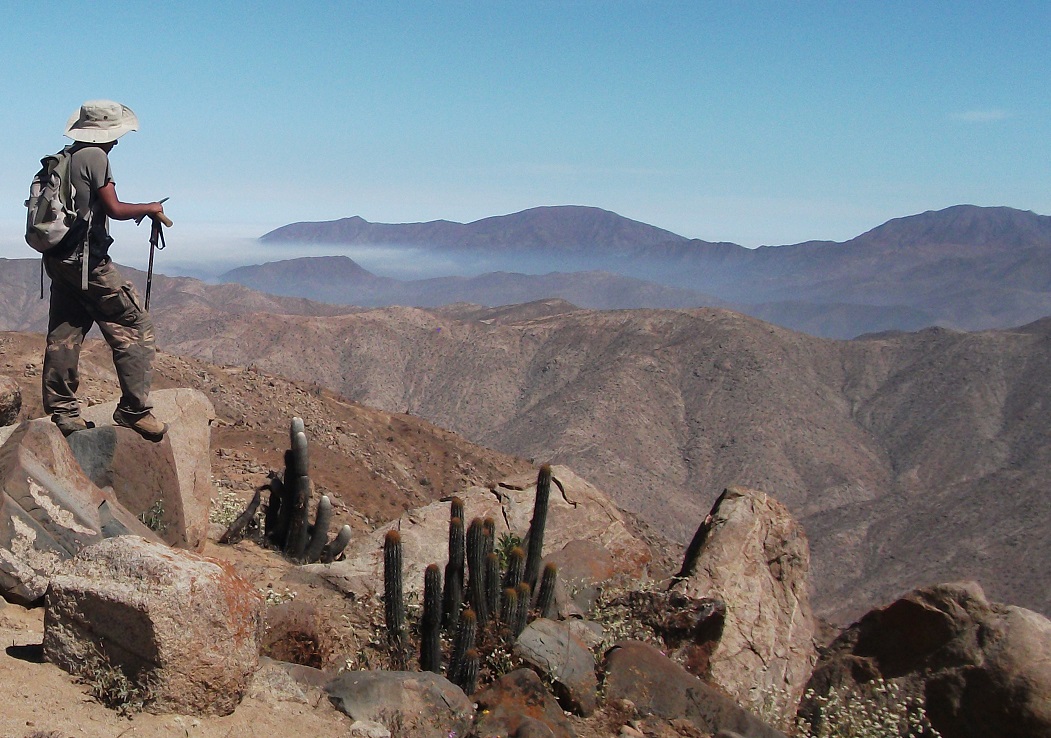
Decorative minerals such as calcite, aragonite, and quartz are often extracted through small and mid-scale quarry operations.
Primary risk areas include:
- Informal extraction
- Limited land rehabilitation
- Inconsistent safety standards
- Insufficient environmental oversight
This section analyzes regulatory compliance indicators, quarry verification systems, and environmental impact mitigation in decorative stone mining.
→ Non-Precious Stone Mining
Precious Gemstone Mining
Precious gemstones operate within a high-value supply chain with elevated traceability risks.
Key challenges:
- Smuggling networks
- Informal artisanal extraction
- Conflict financing exposure
- Violent crime, drug abuse and human rights violations
- Traceability breakdowns
This section explains due diligence systems, mine-to-market traceability, and risk mitigation protocols specific to precious gemstone sourcing.
→ Precious Gemstone Mining
Gold Mining
Gold extraction presents some of the most severe environmental risks within the mineral sector.
Key environmental concerns:
- Mercury use
- River contamination
- Deforestation
- Habitat destruction
- Mix up with drug trafficking
- Violent crimes and human rights violations
This section addresses mercury-free extraction technologies, legal gold sourcing frameworks, and environmental restoration obligations associated with responsible gold mining.
→ Gold Mining
Silver Mining
Silver is frequently extracted as a by-product of polymetallic mining operations, introducing different industrial and environmental conditions.
Topics include:
- Industrial-scale compliance systems
- Environmental impact controls
- By-product traceability
- Refining transparency
→ Silver Mining
Processing & Fabrication
Ethical responsibility must extend beyond extraction into transformation environments, which often present serious occupational and environmental risks.
Lapidary – Cabochon & Stone Carving
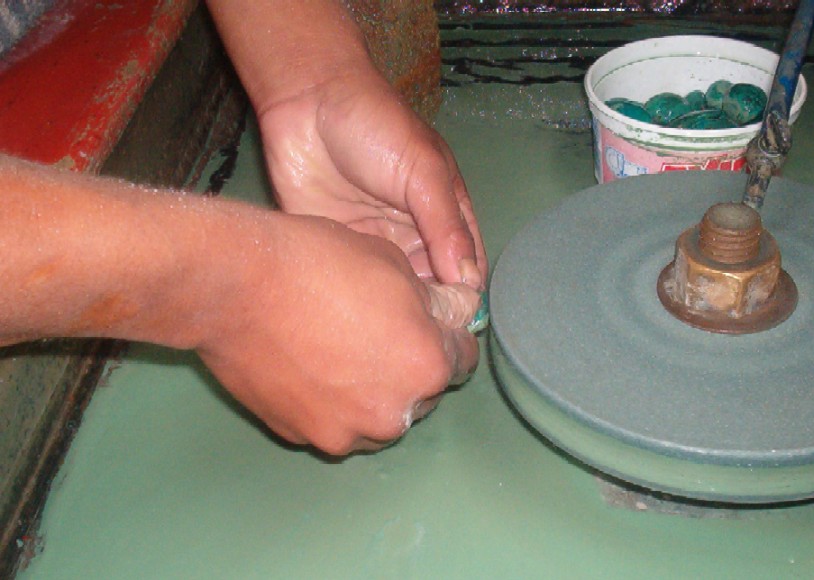
Stone carving and cabochon production frequently occur in underregulated workshops.
Critical risk areas:
- Silica dust exposure
- Inadequate ventilation
- Informal labor conditions
- Waste material disposal
This section outlines worker protection standards, controlled production environments, and waste reintegration systems in lapidary operations.
→ Lapidary & Stone Processing
Precious Stone Faceting
Faceting workshops operate under distinct technical and economic pressures.
This section covers:
- Skilled labor certification
- Transparent gem traceability
- Precision cutting standards
- Ethical workshop verification
→ Precious Stone Faceting
Gold & Silver Jewelry Fabrication
Jewelry production introduces metal refining, alloying, casting, finishing, and polishing processes.
This section examines:
- Refining transparency
- Alloy traceability
- Hallmarking compliance
- Worker safety
- Waste metal recovery systems
→ Gold Jewelry Production
→ Silver Jewelry Production
Environmental Stewardship & Zero-Waste Systems
Gemrock International integrates environmental responsibility across extraction, processing, and fabrication.
Zero-Waste Production
Material residues from carving and cutting are reintegrated into secondary product lines or repurposed into mineral composites.
Topics include:
- Stone dust recovery
- Recycled mineral aggregates
- Metal recovery in jewelry fabrication
- Closed-loop material systems
Zero-waste production reduces landfill impact and lowers resource extraction pressure.
→ Zero-Waste Production Systems
Water Stewardship
Water consumption in mining and lapidary operations must be actively managed.
This section addresses:
- Closed-loop water recycling
- Sediment filtration systems
- Reduction of freshwater withdrawal
- Wastewater treatment protocols
→ Water Management Systems
Carbon Responsibility & Energy Management
Carbon impact occurs through:
- Extraction equipment
- Transport logistics
- Workshop energy consumption
- International shipping
This section explores:
- Energy efficiency optimization
- Carbon footprint assessment
- Emission reduction strategies
- Carbon-neutral production pathways
→ Carbon Neutrality Strategy
Habitat Conservation & Restoration
Responsible extraction requires post-mining land management.
Topics include:
- Rehabilitation of quarry sites
- Reforestation programs
- Biodiversity protection measures
- Land stabilization practices
- Habitat restoration transforms extraction from depletion to managed stewardship.
→ Habitat Conservation & Restoration
Mineral Science & Material Knowledge
Scientific understanding underpins responsible processing and correct application.
This section includes:
- Crystal structure and polymorphism
- Mohs hardness and mechanical behavior
- Structural stability of carbonate minerals
- Environmental sensitivity of specific stones
- Metal properties in jewelry fabrication
Material knowledge supports safe processing, durability, and long-term sustainability.
→ Mineral Science
Quality & Grading Standards
Quality control ensures that materials are processed responsibly and used appropriately.
This section outlines:
- Structural integrity assessment
- Application-based grading
- Visual vs technical evaluation
- Processing suitability standards
Transparent grading reduces waste, prevents misuse, and improves supply chain efficiency.
→ Quality & Grading Standards
International Trade & Logistics
Ethical production must be matched by compliant international distribution.
Topics include:
- Export documentation
- Chain-of-custody verification
- Customs compliance
- Secure packaging standards
- Cross-border regulatory alignment
Transparent logistics complete the responsible supply chain.
→ Export & Trade Compliance
→ Logistics & Packaging
Integrated Ethical & Environmental Framework
Gemrock International applies a continuous verification system across:
- Mining legality
- Environmental performance
- Worker safety
- Zero-waste production
- Water conservation
- Carbon impact reduction
- Habitat restoration
- Processing transparency
- Fabrication compliance
- Trade documentation
Ethical certification at extraction alone is insufficient.
True responsibility requires measurable standards across the entire mineral transformation chain — from geological origin to finished product and international delivery.
Gemrock Peru: Social and Environmental Responsability
Why choose Gemrock?
All our workers are hired under formal working contracts and provided with all legally required health, labour and retirement benefits.
We are going to great length to find the right process for each type of stone in order to achieve the best possible polish.

During our lapidary production we have a rigurous review process in place that filters out any product that shows the tyniest scratches.
We strive for perfect shapes in all our products, even if this means an extreemly high effort in carving.
Even if handmade piece by piece, we do offer standartized sizes that do not vary more than 2 to 3 mm. This improves the pricing process of our clients.
We are constantly improving our production process in order to achieve shorter production times while maintaining quality. Also we are trying to save water and energy.
All our workers are hired under formal working contracts and provided with all legally required health, labour and retirement benefits.
We are going to great length to find the right process for each type of stone in order to achieve the best possible polish.
During our lapidary production we have a rigurous review process in place that filters out any product that shows the tyniest scratches.
We strive for perfect shapes in all our products, even if this means an extreemly high effort in carving.
Even if handmade piece by piece, we do offer standartized sizes that do not vary more than 2 to 3 mm. This improves the pricing process of our clients.
We are constantly improving our production process in order to achieve shorter production times while maintaining quality. Also we are trying to save water and energy.
Shop your crystals & jewelry NOW
NATURA MINERA
Achetez vos cristaux Gemrock, produits en cristal et bijoux à Québec
GEMROCK CANADA
Online retail shop of ethical, top-quality crystal specimens, jewelry, and jewelry-maker accessories like cabochons, silver chains, silver wire, and charms. Exports to USA.
Gemrock Peru - Tienda
Venta de cristales naturales, piedras talladas y joyería de Gemrock en Peru a nivel nacional.
Free Gemrock Learning Resources
Our Gemrock Quora space – Click icon & ask anything
Gemrock Subreddit – Click icon & ask anything
Educational Gemrock YouTube Videos
LinkedIn group : ethical crystals & start-up companies
Free Gemrock Learning Resources
Our Gemrock Quora space
Click the icon & ask anything
Gemrock Subreddit
Click the icon & ask anything
Educational Gemrock YouTube Videos
Connect with specialists in our LinkedIn group: ethical crystals & start-up companies
Connect wherever you want and can
Gemrock behind the scenes – raw & authentic
Just in case TikTok gets banned
No time for long YouTube videos?
Take the shortcut
LinkedIn newsletter:
Ethical Crystals & Jewelry
BlueSky – the X-alternative
Threads – the x-alternative
leaving soon…
NO, to Elon
Connect wherever you want and can
Gemrock behind the scenes – raw & authentic
Just in case TikTok gets banned
No time for long YouTube videos?
Take the shortcut
LinkedIn newsletter:
Ethical Crystals & Jewelry
BlueSky – the X-alternative
Threads – the x-alternative
leaving soon…
NO, to Elon
Get in Touch
+51 994104206
gemrockinternational@gmail.com